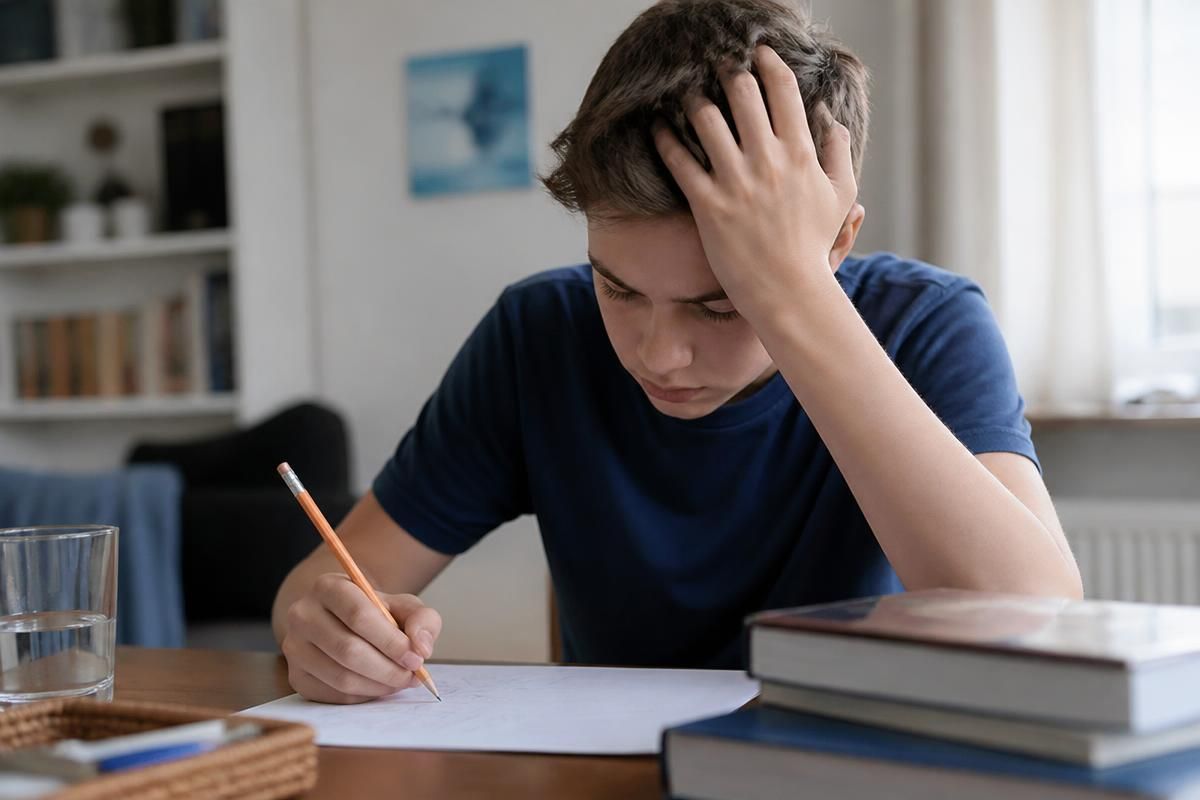
A lot of kids say they hate maths. But there's a difference between a student who finds maths hard and one who feels genuinely distressed by it, heart racing before a test, shutting down during homework, convincing themselves early that they're simply 'not a maths person.'
That second group may be experiencing maths anxiety, and it's more common than most parents realise. Research confirms it's a real, documented phenomenon and one that responds well to the right kind of support.
What Is Maths Anxiety?
Maths anxiety is a feeling of worry, tension, or fear specifically tied to mathematical tasks. It's not just disliking the subject or finding it difficult, it's an emotional response that can interfere with a student's ability to think clearly, even when they actually understand the material.
The Victorian Department of Education describes maths anxiety as widely reported among Australian students, noting it can range from mild discomfort to severely limiting a student's engagement with mathematics. Importantly, it isn't a sign of low intelligence or inability. Many students with maths anxiety are perfectly capable; the anxiety itself is the barrier, not a lack of skill.
A 2025 analysis of PISA 2022 data for Australian students, published in Frontiers in Psychology, found that maths anxiety consumes cognitive resources and impairs problem-solving efficiency, meaning anxious students underperform relative to their actual ability, particularly under timed or test conditions.
What Does Maths Anxiety Look Like?
Because maths anxiety is emotional as much as it is academic, it doesn't always look like what parents expect. Avoidance is one of the most common signs, however, it can show up in ways that look more like laziness or defiance rather than distress.
Signs to watch for in primary school students
- Refusing to start maths homework or taking far longer than necessary
- Complaints of stomach aches or headaches on days with maths tests
- Crying or becoming upset when maths is mentioned
- Saying 'I'm stupid' or 'I'll never get it' even when they manage other subjects well
- Avoiding asking for help because they feel embarrassed
Signs to watch for in high school students
- Going blank during maths exams despite knowing the content
- Choosing subjects in Years 10–12 specifically to avoid maths
- Declining confidence that seems out of step with actual performance
- Procrastinating heavily on maths assignments or study
The Grattan Institute's 2025 report, The Maths Guarantee, noted that maths learning gaps in Australia emerge early and compound over time and that low confidence is both a cause and a consequence of falling behind. A student who feels anxious avoids practice; avoiding practice widens the gap; the widening gap deepens the anxiety. Breaking that cycle early matters.
What Causes Maths Anxiety?
Maths anxiety rarely has a single cause. It usually builds gradually, through a combination of experiences that leave a student feeling unsafe or incapable in maths settings. Common contributing factors include:
- A negative early experience. A moment of embarrassment in class, a harsh correction, or a failed test in primary school can set a pattern of avoidance that follows a student for years.
- Timed tests and performance pressure. Speed-based maths activities including certain types of classroom drills are strongly associated with increased maths anxiety, particularly in primary school. Being asked to perform in front of others raises the stakes in ways that shut down thinking.
- Fixed mindset beliefs. When students believe that maths ability is something you either have or don't rather than a skill that develops with practice, they interpret every mistake as evidence that they're not capable. This is especially common among students who were told they were 'good at maths' early on, then hit a wall.
- Parental attitudes. Research consistently shows that parents who describe themselves as 'bad at maths' or who express anxiety about maths in front of their children can inadvertently pass those attitudes on. This isn't about blame, it is about awareness.
What Actually Helps
The good news is that maths anxiety responds well to targeted support. Several approaches have strong evidence behind them.
1. Low-pressure, one-on-one practice
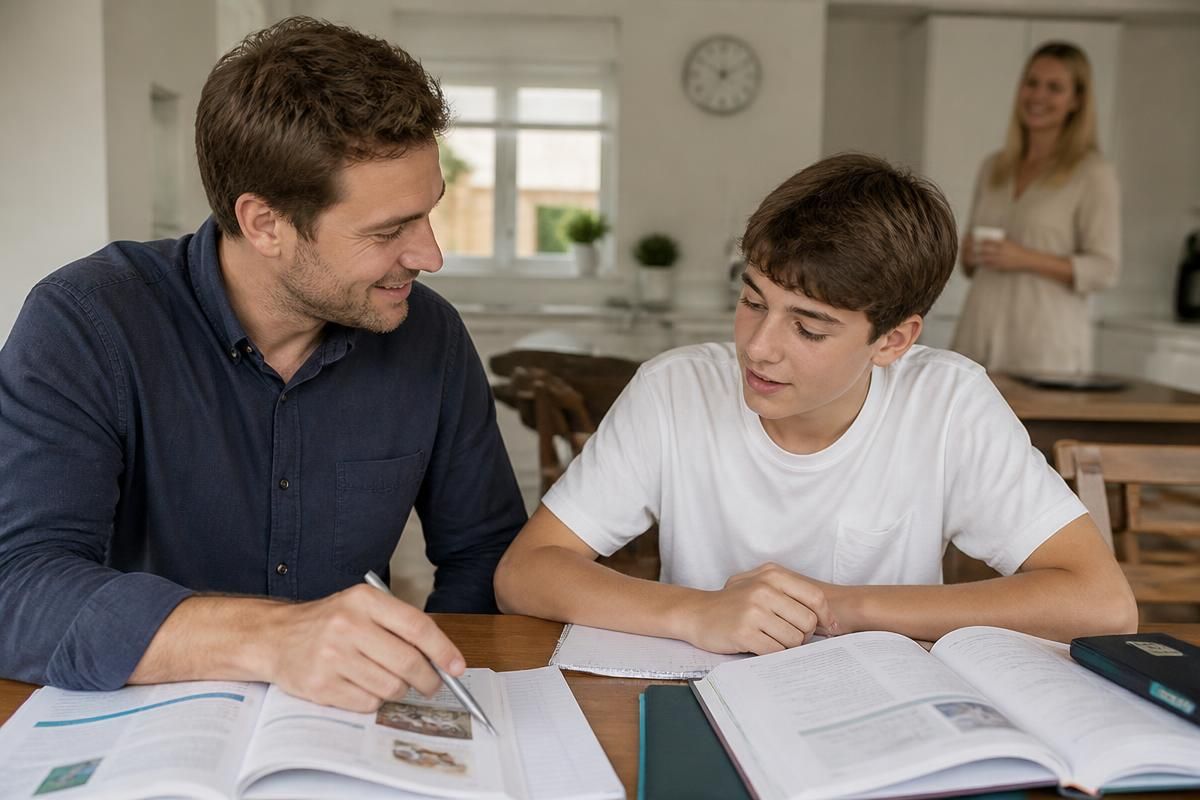
One of the most effective interventions for maths anxiety is simply removing the social stakes. When a student works one-on-one with a patient maths tutor where there's no class to perform in front of, no timer, no embarrassment, many of the triggers that activate anxiety disappear. The Education Endowment Foundation's research consistently finds that personalised one-on-one tutoring produces meaningful learning gains, and for anxious students, the emotional safety of the setting is a key reason why.
2. Building genuine understanding, not just procedures
Students who have learned maths as a set of rules to memorise become very vulnerable when they forget a step. Students who understand why a method works can reconstruct it under pressure. A good private maths tutor focuses on building that understanding, making the content feel logical rather than arbitrary, which reduces the fear that comes from feeling lost.
3. Regular, low-stakes success
Confidence rebuilds through repeated small wins. A skilled tutor will often start slightly below where a student is struggling, not to waste time, but to let them experience success and momentum before tackling the harder material. This is particularly important for students who have built up a strong belief that they 'can't do maths.'
4. Reframing mistakes as part of learning
Students with maths anxiety often treat every error as confirmation of their inadequacy. An experienced tutor actively reframes mistakes, treating them as information, not failure and helps students develop the emotional resilience to persist when something doesn't immediately make sense.
5. Consistency over cramming
Maths anxiety tends to worsen under last-minute pressure. Regular, consistent academic support one-on-one tutoring once or twice a week over a full term builds both skills and confidence in a way that a weekend of intensive revision before exams simply cannot replicate.
A Note for HSC and Senior Secondary Students
Maths anxiety doesn't disappear at high school; it often intensifies as the curriculum becomes more abstract and the stakes feel higher. For students in Years 10 to 12 preparing for the HSC, VCE, QCE, or WACE, maths anxiety during exams can be particularly costly.
HSC tutoring and exam preparation support from RF Tutoring addresses this directly. Beyond content knowledge, experienced senior secondary maths tutors work on exam technique, time management under pressure, and the kind of calm, systematic approach to problem-solving that helps anxious students access what they actually know when it matters most.
How RF Tutoring Can Help
RF Tutoring matches students across Australia with experienced, patient maths tutors who understand that results and confidence go hand in hand. Whether your child is in primary school and starting to show early signs of maths avoidance, or in Year 11 and dreading their upcoming exam, our tutors provide personalised, one-on-one tutoring in a low-pressure environment designed to rebuild both skills and self-belief.
We offer in-home tutoring and online tutoring across Brisbane, Sydney, Melbourne, Perth, Adelaide, Canberra, Darwin, and Hobart, with flexible weekly scheduling and no lock-in contracts.
If your child has decided they're 'not a maths person,' we'd respectfully disagree and we'd love the chance to prove it. Book your first session.
Frequently Asked Questions
What is maths anxiety?
How do I know if my child has maths anxiety rather than just finding maths hard?
Can tutoring help a child with maths anxiety?
How often should maths tutoring run?
Do you offer maths tutoring online and in-home?
Get matched with the right tutor.
Personalised one-to-one tutoring for primary, high school, ATAR, NAPLAN and beyond — across Australia.
Get started with RF Tutoring